Commercial Waste Esher: Recycling and Sustainability
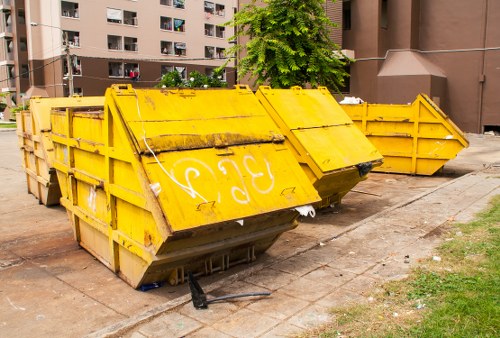 Commercial Waste Esher is committed to creating an eco-friendly waste disposal area that supports local businesses, reduces landfill and accelerates the shift toward a sustainable rubbish area for the town and surrounding boroughs. This page outlines our targets, partnerships, local facilities and the low-carbon transport solutions that underpin a practical, measurable route to better waste management. Our approach is pragmatic: increase recyclate capture, minimise residual waste and ensure material re-use wherever possible.
We set a clear recycling percentage target for commercial collectors operating across Esher and nearby wards: a minimum of 65% recycling by weight for all segregated commercial streams within the next five years, rising incrementally to 75% as infrastructure improves. This target aligns with borough-level ambitions and complements household separation schemes, recognising that effective commercial recycling in Esher depends on consistent sorting, collaboration with transfer stations and regular reporting.
 The local approach to waste separation has been evolving: dry mixed recycling, paper and cardboard, food waste and textiles collections are increasingly standard across boroughs. For businesses, this means clear on-site segregation and labelled bins. Our commercial waste services in Esher focus on practical separation protocols so that glass, plastics, metals and organics enter the right streams — reducing contamination and maximising the value of recycled materials at processing facilities.
Local Transfer Stations and Processing Hubs
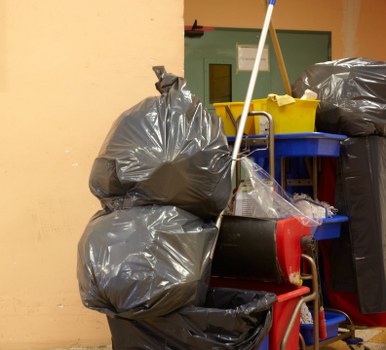 Access to local transfer stations is central to an efficient eco-friendly waste disposal area. Esher benefits from nearby transfer and processing hubs where materials are sorted, baled and dispatched to reprocessors. Using local facilities shortens haul distances, lowers emissions and speeds turnaround for commercial clients. We prioritise routes that feed into high-quality MRFs (Materials Recovery Facilities) and organics processors to ensure the best environmental outcomes for collected waste.
Our network emphasises transparency: waste is tracked from bin to facility, and commercial clients receive clear breakdowns of diversion rates and material destinations. This tracking supports our recycling percentage target and helps businesses demonstrate sustainable procurement and waste reduction as part of corporate responsibility or environmental management systems.
Partnerships with charities and community groups are another cornerstone of our model. We work with local reuse organisations to divert usable items such as furniture, clothing and office equipment before they reach processing plants. These collaborations reduce waste volumes, support local social value and give businesses a convenient way to donate surplus stock.
Charity Partnerships and Low-Carbon Fleets
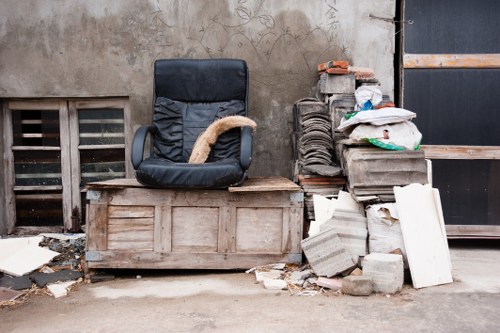 Our charity partnerships are structured around reuse-first principles. Rather than disposing of good-quality items, Commercial Waste Esher coordinates collections with registered charities that can restore and redistribute goods. This not only lessens environmental impact but also reinforces Esher’s community fabric by channeling resources where they’re most needed.
We have committed to a phased roll-out of low-carbon vans across our fleet to support the sustainable rubbish area objectives. These vehicles include hybrid and battery-electric vans used for short urban runs and low-emission replacement diesel alternatives for heavier routes. Transitioning to low-carbon vans reduces operational greenhouse gas emissions and improves local air quality — an important benefit for densely used town centres and business parks.
For businesses seeking to reduce their own carbon footprint, we offer route optimisation, backhaul diversion to minimise empty miles, and consolidated collections to reduce the number of visits. These measures, combined with the use of low-carbon vans, are expected to cut fleet emissions significantly while keeping costs competitive for commercial customers in Esher.
 Practical recycling actions for the commercial sector include routine auditing of waste streams, staff training on separation standards, clear labelling and provision of appropriate containers for organics, paper, cardboard and dry recyclables. Small operational changes can have a major cumulative effect: clearer sorting reduces contamination at MRFs and increases the tonnage that is genuinely recycled rather than rejected to landfill or incineration.
Key components of our sustainable rubbish area strategy include:
- Clear recycling targets: 65–75% commercial recycling ambition.
- Use of local transfer stations and certified processing hubs.
- Partnerships with charities for reuse and redistribution.
- Investment in low-carbon vans and route efficiency.
- Regular reporting and material traceability for businesses.
Working together with local authorities, borough recycling programmes and community organisations, our goal is to build a resilient, scalable and accountable model for commercial waste in Esher. By blending practical on-site separation, close ties with local transfer stations, charity reuse pathways and a greener vehicle fleet, we aim to create an exemplar eco-friendly waste disposal area that supports both the local economy and the environment.
Adopting these measures fosters long-term sustainability: less pressure on landfill, lower carbon emissions across the supply chain and stronger community outcomes through donations and reuse. As Esher’s businesses increasingly prioritise environmental performance, our integrated approach to commercial waste management ensures the town remains at the forefront of responsible, measurable waste reduction and recycling.
